Collection of Diet Hacks!

For those who're looking to get in shape, see the collection of diet and weight loss articles below:

Weight Loss Tips:

Weight Loss Supplements

Fat Burning Tips:

Holiday Weight Tips

Exercise For Weight Loss

New treatment for the common cold?

Cold Virus Structure
We're in the middle of winter for those of us in northern climates which generally means that we're faced with coping with symptoms of the common cold.  However, a new research study on new nasal spray containing Iota-Carrageenan may hold some promise.


To date, the common cold still lacks an effective and safe antiviral treatment.  Yet, it's the most prevalent viral disease in humans.


Carrageenans are actually a family of linear polysaccharides extracted from red seaweeds.  

In a study involving 35 human subjects published in the journal, Respiratory Research [1], the study authors found that Iota-Carrageenan nasal spray actually reduced symptoms of the common cold and viral load in the nasal lavages.

From the study authors:
CONCLUSIONS: Iota-Carrageenan nasal spray appears to be a promising treatment for safe and effective treatment of early symptoms of common cold. Larger trials are indicated to confirm the results.

For those looking for currently available, common cold remedies, or natural remedies for the common cold, follow the links for more info.

Reference:

Eccles R, Meier C, Jawad M, Weinmüllner R, Grassauer A, Prieschl-Grassauer E.Efficacy and safety of an antiviral Iota-Carrageenan nasal spray: a randomized, double-blind, placebo-controlled exploratory study in volunteers with early symptoms of the common cold. Respir Res. 2010 Aug 10;11:108.

How to beat the cold & flu?


For many of us, suffering from the common cold is something that we're accustomed to be now.  In northern climates, it's speculated that the lack of sunlight and hence lower levels of vitamin D may play a role in the increase in incidence of these infections.

As well, during the winter months, we often spend more time indoors which results in more close contact with other people which increases the chances of catching a cold.  On the other hand, studies suggest that cold weather alone does not play a role in increasing our susceptibility of catching a cold.

To start off with, it's important to take basic measures such as regular hand washing, sleep, exercise, and eating fresh fruits and vegetables.  As well, stress can play a role in reducing the function of your immune system, so it's a good idea to try to reduce your stress levels during the winter.

If you're already sick and suffering from the usual symptoms such as a sore throat, cough, runny nose, low-grade fever, and headache, what can you do to reduce the duration and severity of your cold?

Here's a list of 10 natural cold remedies including various important vitamins along with other herbal remedies.  In addition, always remember to get your yearly flu shot!

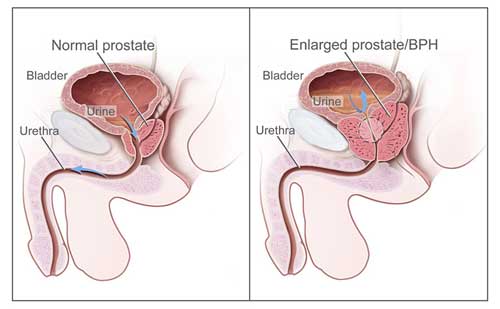
How to Shrink an Enlarged Prostate?


Benign Prostate Hyperplasia is also know as Benign Prostate Hypertrophy.  Either way that you want to refer to this common medical condition, it's so common that it's basically considered a normal part of aging.

Though it maybe common, there are things that you can do to shrink your enlarged prostate.  Of course, you'll want to talk to your doctor about options for prostate hypertrophy, but there are natural options that you may want to discuss with your physician.

How to shrink your enlarged prostate naturally?

To start off with, Zinc, Saw Palmetto, and lycopene are probably the three most commonly used natural remedies for an enlarged prostate.

Other dietary options include a diet low in fat and red meat with moderate alcohol consumption and plenty of fruits and vegetables.

Treatment Options for Rheumatoid Arthritis


For those who suffer from rheumatoid arthritis, it can be a terribly debilitating condition.  In some cases, the severity of this medical condition affects some more than others.

Though there continues to be advances in the treatment options for rheumatoid arthritis, some of the mainstay treatment remains unchanged.

Here's a review of the common treatment options for those with rheumatoid arthritis:

treatment options for rheumatoid arthritis

Benefits of exercise for the elderly


Many of us wonder if it's too late to start exercise in terms of experiencing actual health benefits.  For those who've asked themselves this question, a recent study attempts to provide the answer. Specifically, researchers in Portugal looked as some of the health benefits of exercise in a population with an average age of 76.  The study participants engaged in either a progressive strength or aerobic exercise for approximately four months.


After 16 weeks, the study researchers found improvements in their fitness, cholesterol levels, and markers of inflammation showing that it's never too late to start an exercise program.  Naturally, you should talk to your doctor prior to starting an exercise regime particularly if you're in an elderly age group.

For more information visit: Benefits of exercise for the elderly

New study on Metabolic Syndrome and occupations


If you're looking at one more reason to lose weight, you might need to pay more attention to your occupation.  A recent study by researchers in Florida suggests that certain occupations are at greater risk for the metabolic syndrome.


To provide some background, the metabolic syndrome is considered a multiplex risk factor or basically a combination of medical disorders which increase your risk of developing cardiovascular disease, stroke, fatty liver, diabetes and several types of cancer. 

Which occupations were at greatest risk?

  • food preparation and food service workers – greatest risk
  • farm managers, operators, and supervisors – also have the were in the highest risk category (29.6-31.1% age-adjusted prevalence)
  • transportation/material moving workers had significantly greater odds than executive, administrative, and managerial professionals.
The researchers hope that by identifying occupational groups at greatest risk, interventions can be targeted to those at highest risk of developing the metabolic syndrome. 

reference:
Davila EP, Florez H, Fleming LE, Lee DJ, Goodman E, Leblanc WG, Caban-Martinez AJ, Arheart KL, McCollister KE, Christ SL, Clark JC 3rd, Clarke T. Prevalence of the Metabolic Syndrome among US Workers.Diabetes Care. 2010 Jun 28.

New health and fitness blog network


To provide all of my subscribed readers to this blog with a quick update, as I've mentioned before, I moved all of my previous blogs about dietary supplements, to a new location:  Dietary Supplement Updates or Supplement Updates for short.  On another note, I've recently launched a health and fitness blog network called Hive Health Media with a friend of my from Toronto.  Doug's a personal trainer from Toronto who has a fitness blog that I would highly recommend that you visit called Health Habits. 

We look forward to seeing you at the new locations.  

Commonly Dietary Supplements for Joint Pain or Arthritis


As I have previously noted, I will now be writing my blog posts at a new location--Supplement Updates.  I thought that I would provide a stand alone recap of many of the commonly used dietary supplements for joint pain or arthritis as basically a final post for this blog site.

Health Benefits of Fish Oil Supplements


Several clinical studies have documented the health benefits of fish oil supplements, especially on the cardiovascular system. This recent study demonstrates a decreased resting heart rate as well as an improvement in endothelial (cells that line blood vessels) function.
"FO supplementation in healthy subjects is associated with improved endothelial function and decreased resting HR" (Shah et al, 2007).

Reference:

Shah AP, Ichiuji AM, Han JK, Traina M, El-Bialy A, Meymandi SK, Wachsner RY. Cardiovascular and endothelial effects of fish oil supplementation in healthy volunteers. J Cardiovasc Pharmacol Ther. 2007 Sep;12(3):213-9.

Do seniors consume an adequate intake of vitamin d?


Canadian researchers published the results of a recent study which looked at vitamin d intake among residents in a long-term care facility.  Thirty three percent of these residents were previously diagnosed with osteoporosis, osteoarthritis, and falls and/or fractures.

The study authors found that the average resident consumed just 295 IU of vitamin d per day.  Those who were provided nutritional supplementation consumed 357 IU while those who weren't consumed only 207 IU of vitamin d. 

Conclusions:
  • None of the study participants met the recommended AI of 600 IU through dietary sources alone. 
  • Study results suggest that all LTC residents require vitamin D micronutrient supplementation of at least 400 IU to achieve the recommended AI of 600 IU.

Source:

Hall KL, Denda CE, Yeung H. Dietary vitamin d intake among elderly residents in a veterans' centre. Can J Diet Pract Res. 2010 Spring;71(1):49-52.

Avocado-Soybean Unsaponifiables for Arthritis Pain?


Get me an avocado, snorkle, and an ice pack?

A fairly recent meta-analysis published in the journal, Osteoarthritis Cartilage (Christensen et al, 2008) found that avocado soybean unsaponifiables (ASU) may help to relieve pain from arthritis.

In this review, they suggested a daily dose of 300 mg ASU for 3 months as a trial.

The number needed to treat (NNT) was six.

What's interesting is that this supplement was more effective for patients with knee as opposed to hip arthritis. 

For more info about natural arthritis treatments, follow the link.

Reference:


  1. Christensen R, Bartels EM, Astrup A, Bliddal H. Symptomatic efficacy of avocado-soybean unsaponifiables (ASU) in osteoarthritis (OA) patients: a meta-analysis of randomized controlled trials.  Osteoarthritis Cartilage. 2008 Apr;16(4):399-408. Epub 2007 Nov 26.

Is oral or topical Diclofenac sodium better for muscle or joint pain?

Diclofenac sodium is a non-steroidal anti-inflammatory drug used to reduce inflammation and to reduce pain in conditions such as arthritis. Two routes of administration are available—oral as well as topical. The efficacy of oral non-steroidal anti-inflammatory drugs has been established for synovial (joint) and muscle tissue. However, there is little data available on the efficacy of topical NSAIDS. The results of a recent study published in the British Journal of Clinical Pharmacology (Miyatake et al, 2009) compared the concentration of diclofenac from topical and oral administration.

Dosages compared included a capsule containing 37.5mg of diclofenac sodium vs. 2 tapes containing 30mg of diclofenac sodium for topical application. Concentrations of diclofenac were measured in muscle, synovial membrane, and plasma 12 hours following administration.

Results: The diclofenac concentration was significantly higher in the muscle after topical application compared to oral administration (measured 12h after dosage). However, the concentrations in the synovial membrane was significantly lower after topic administration compared to oral administration. There were no significant differences in plasma diclofenac levels between either route of administration.

Conclusions: The results of this study suggest that topical administration of diclofenac sodium may actually be better for muscle pain. In contrast, these study results suggest that oral diclophanc sodium may be a better route of administration for people with joint pain or arthritis.

Side effects of Diclofenac sodium (among others)


  1. Cardiac—potential increased risk of heart disease/myocardial infarction
  2. Gastrointestinal—ulcers/bleeding.
  3. Liver—damage/hepatitis
  4. Kidney—adverse kidney effects
  5. Other—bone marrow depression, affects blood clotting
    Reference:
    Miyatake S, Ichiyama H, Kondo E, Yasuda K. Randomized clinical comparisons of diclofenac concentration in the soft tissues and blood plasma between topical and oral applications. Br J Clin Pharmacol. 2009 Jan;67(1):125-9.

    Does Garlic actually make you smarter?

    Garlic is something that's well known for a lot of different things. One of the first things that comes to most people's mind is the pungent aroma of garlic. Next, on most people's list of associations of garlic include its potential benefits at warding off vampires. However, garlic itself may actually have several potential health benefits.

    Potential health benefits of garlic:
    • regulating cholesterol levels
    • regulating blood sugar levels
    • antimicrobial activity
    • memory improvement?

    Garlic (Allium sativum) is used both as a food as well as a medicinal herb. The results of a recent study involving rats published in the Journal of Medicinal Food (2008) suggests that administration of fresh garlic homogenate actuallly improved both brain serotonin (5-hydroxytryptamine [5-HT]) levels) as well as cognitive performance (Haider et al, 2008).


    Reference:

    Haider S, Naz N, Khaliq S, Perveen T, Haleem DJ. Repeated administration of fresh garlic increases memory retention in rats. J Med Food. 2008 Dec;11(4):675-9.

    Evaluation of night-time splints in patients with Rheumatoid Arthritis?

    Rheumatoid arthritis is a very common and debilitating condition for which there are no ideal treatment options. For those who suffer from rheumatoid arthritis, a recent study published in the Journal of Rehabilitative Medicine (Silva et al, 2008), studied the effectiveness of night-time hand positioning splints in rheumatoid arthritis patients.
    "OBJECTIVE: To evaluate the effectiveness of a night-time hand positioning splint in patients with rheumatoid arthritis.

    RESULTS: The groups were homogenous for all parameters at baseline. Pain, Health Assessment Questionnaire score, DASH score, grip strength and pinch strength were significantly different between groups over time and satisfaction with the splint was reported as "better" and "much better" by most participants.

    CONCLUSION:  
    "The use of a night-time hand positioning splint reduces pain, improves grip and pinch strength, upper limb function and functional status in patients with rheumatoid arthritis."

    Reference:

    Silva AC, Jones A, Silva PG, Natour J. Effectiveness of a night-time hand positioning splint in rheumatoid arthritis: a randomized controlled trial. J Rehabil Med. 2008 Oct;40(9):749-54.

    Related blog posts on rheumatoid arthritis:
    1. Glucosamine in rheumatoid arthritis.
    2. Cod liver oil (omega-3 fatty acids) in rheumatoid arthritis.
    3. Ganoderma lucidum (Linzhi) in rheumatoid arthritis.
    4. Omega-3 fatty acids in rheumatoid arthritis.

    Pycnogenol for osteoarthritis?

     Pycnogenol (French maritime pine bark extract)

    The results of a recent study published in the journal, Phytotherapy Research, suggest that Pycnogenol may help alleviate pain in patients with osteoarthritis of the knee. Additionally, pycnogenol helped to improve functional measures.


    Dose: 150 mg Pycnogenol per day at meals.

    RESULTS: Following treatment with Pycnogenol patients reported:
    • An improvement of WOMAC index (Western Ontario and McMaster osteoarthritis index)
    • A significant alleviation of pain by visual analogue scale
    "CONCLUSION: Results show that Pycnogenol in patients with mild to moderate OA improves symptoms and is able to spare NSAIDs."
    Arthritis can be a painful and debilitating medical condition.From this study, it's possible that pycnogenol supplementation may provide some relief. 

    For more information about the health benefits of Pycnogenol follow the link.

    Reference:

    Cisár P, Jány R, Waczulíková I, Sumegová K, Muchová J, Vojtassák J, Duraćková Z, Lisý M, Rohdewald P. Effect of pine bark extract (Pycnogenol) on symptoms of knee osteoarthritis. Phytother Res. 2008 Aug;22(8):1087-92.

    SAMe for Osteoarthritis?

    S-adenosyl methionine for Osteoarthritis?


    Arthritis is a very common condition with approximately 15% of the population in developed nations suffering from some form of arthritis. In fact, osteoarthritis as a result of gradual loss of cartilage, people who suffer from it experience pain and immobility.

    Today, I read a recent study published in the journal, Critial Reviews in Food Science and Nutrition, which discussed how SAMe or S-adenosylmethionine, may work in the treatment of osteoarthritis (Blewett et al, 2008).
    “There are numerous clinical reports showing that SAMe supplementation is an effective treatment for osteoarthritis however little is known regarding the mechanism of action.”

    “Research has identified SAMe as a potential safe treatment for osteoarthritis, that may actually regenerate cartilage.”

    Potential mechanisms:
    • Reduce inflammatory mediators (TNFalpha)
    • Signal proteoglycan synthesis (cartilage component)
    • Treatment with SAMe reduces oxidative stress and liver damage
    • Increasing membrane phospholid methylation for more “fluid” cell membranes

    S-Adenosylmethionine is one of the key ingredients found in Arthroleve™

    For more information about natural remedies for arthritis, follow the link.

    Reference:
    1. Hosea Blewett HJ. Exploring the mechanisms behind S-adenosylmethionine (SAMe) in the treatment of osteoarthritis. Crit Rev Food Sci Nutr. 2008 May;48(5):458-63.

    Folic Acid Supplementation for Psoriasis

    Folic Acid Supplementation for Psoriasis?

    Psoriasis is a very common skin disorder that affects millions of Americans. In fact, it is believed to affect approximately 2-3% of the population. Frequently, people with psoriasis develop red scaly patches. These psoriatic plaques, as they are often referred to as, are areas of excessive skin production and inflammation.

    Though the actual cause of psoriasis is unknown, genetic factors are thought to be involved. Overall, psoriasis can impact the quality of life of people who suffer from this skin condition.

    Psoriatic arthritis is a chronic, inflammatory disease involving the spine and peripheral joints that develops in patients with psoriasis. Further, psoriatic arthritis develops in 5-10% of patients with psoriasis.

    A recent study published in the Journal of Dermatological Treatment discussed the role of folic acid supplementation in patients with psoriasis.

    Background:
    “Relative deficiency of folic acid may occur in conditions such as pregnancy and hyperproliferative or chronic inflammatory disorders.”
    Conclusion:
    “Folic acid supplementation appears as a reasonable therapeutic option in patients affected by chronic inflammatory skin diseases, such as moderate to severe psoriasis; in particular, those with concomitant hyperhomocysteinemia, low plasma folate and additional cardiovascular risk factors.”
    Reference:

    Gisondi P, Fantuzzi F, Malerba M, Girolomoni G. Folic acid in general medicine and dermatology. J Dermatolog Treat. 2007;18(3):138-46.

    Breakfast of Champions?

    Today, I've just recently read what Usain Bolt, the Jamaican sprinter with 2 gold medals and 2 world records at the Beijing Olympics, ate prior to his race. To my complete surprise, Usain Bolt fueled up on Chicken McNuggets from McDonald's prior to the race....

    "I'm lovin it."

    From a nutritional stand point, it would not take very much to question this choice, but given that he set 2 world record times (100m 9.69/200m 19.30) and won 2 Olympic gold medals, it's hard to imagine that he would have ran much faster with a healthier breakfast. The last sprinter to win both the 100m and 200m events at the same Olympic games was Carl Lewis in 1984.

    A wrinkle in time...

    A Wrinkle in time...

    As we age, many of us become concerned about how our appearance changes. Both men and women alike spend an untold amount of money on Botox®, Restylane®, and cosmetic surgery. Are there any simpler ways to prevent wrinkles?

    The results of a recent study which was published in the American Journal of Clinical Nutrition suggest that our diets may actually affect how our skin ages. To some, this revelation is not too much of a surprise. However, what specifically can we do to ensure that our skin does not age prematurely?

    The results of this recent study suggest that there are four things that we can do to help prevent wrinkles and to promote better skin-aging appearance.

    1. Higher intake of Vitamin C is associated with a lower likelihood of a wrinkled appearance. However, I would encourage an intake through healthy dietary sources. Vitamin C, when taken in excess, can result in complications including kidney stones.
    2. Higher intake of linoleic acid (omega 6 fatty acids) is associated with a lower risk of skin atrophy and age-related dryness.
    3. Higher intake of fat in your diet may also result in an increased likelihood of wrinkles as well as skin atrophy. Of course, there are other benefits to eating a healthy, low fat diet which may include lowering your cardiovascular risk.
    4. Higher carbohydrate diets are also associated with a greater likelihood of both wrinkles and skin atrophy. Further, most people are aware that eating both carbohydrates and fat in excess can lead to both obesity as well as diabetes.
    “CONCLUSIONS: Higher intakes of vitamin C and linoleic acid and lower intakes of fats and carbohydrates are associated with better skin-aging appearance. Promoting healthy dietary behaviors may have additional benefit for skin appearance in addition to other health outcomes in the population.”

    Reference:
    Cosgrove MC, Franco OH, Granger SP, Murray PG, Mayes AE. Dietary nutrient intakes and skin-aging appearance among middle-aged American women. Am J Clin Nutr. 2007 Oct;86(4):1225-31.